Technology

How Silicon Valley is calling the shots on the battlefields of Ukraine

Sometime in the late morning of February 4, somebody at SpaceX headquarters pressed a computer key. A command line was beamed to Starlink’s 9,600 satellites in low Earth orbit. Their onboard processors, circling 550 kilometers above the Earth, instantly obeyed the command and fractionally changed their operational settings. Back down on the frozen ground, in the trenches, bunkers and ruined cities of Russian-occupied Ukraine, hundreds of Starlink terminals lost internet connectivity. As another freezing night set in, the Russian army’s drones and tactical comms went dark. “We are left without communication!” complained a frontline Russian military officer in a video posted on the Telegram channel “Voenkory Russian Spring.” “Virtually on

I don’t trust AI’s built-in ‘safety systems’

Cars ruined cities. Anyone can see that cities built before the invention of the automobile are incomparably more beautiful and serene than anything built after them. The contrast between Los Angeles and Prague is unmistakable. But people like things that move fast and make life easier, which means we’re stuck with the modern city hellscape whether we like it or not. And today, the same is true for AI. The contrast between the internet five years ago and today is unmistakable: content-slop, workslop, AI-generated comments, fake opinions and phony judgments, trite phrases, apocalyptic hysteria, the biggest intellectual-property heist in human history – all because of the invention of Large Language

ai

Where will AI strike first?

Homo sapiens, as a species, is programmed to anticipate death, disaster and apocalypse. The monster in the mere, the ague that comes from the east, the flood that wipes out all living creatures outside the Ark. The reason children – and adults in horror movies – are scared of the dark is because darkness is where predators strike. We have a sensible evolutionary fear of things that go bump in the night. For thousands of years it was possible to argue this primal fear of apocalypse was overwrought. No matter what humans did, or did not do, we were incapable of destroying ourselves and anything that might destroy us in

Nancy Guthrie and the gamification of crime

Nancy Guthrie had been missing for less than 48 hours when the game began. Not the investigation, which was already under way, with FBI agents crawling the Catalina Foothills and more than 30,000 tips flooding in from the public, but the thing building around her disappearance, the thing that one could generously call “journalism” in both its legacy and citizen varieties.  By the time Ashleigh Banfield named a suspect in the case on her podcast, by the time Megyn Kelly had structured coverage around episode titles such as “Nest Camera Questions, Savannah Stalker Possibilities and Bitcoin Rumblings,” by the time dozens of true-crime influencers had weighed in, the kidnapping of

Will Bezos beat Musk to the Moon?

Even Elon Musk has to face a dose of reality every once in a while. Technology and politics have forced him to turn his gaze away from Mars, for the moment at least, to put Americans back on the surface of the Moon before China gets there. But it might already be too late. If America has any chance of beating China, it now seems inevitable that the next American human landing on the Moon will not be by Musk’s Starship but using a craft being developed by his rival Jeff Bezos. Announcing the pivot, Musk wrote on X: “For those unaware, SpaceX has already shifted focus to building a

Bezos

Cartel drones vs Texas lasers

Yesterday, El Paso, Texas, was placed under severe restrictions from the Federal Aviation Administration. For unspecified reasons of national security, no aircraft would be allowed in or out for ten days. Washington sources soon confirmed what many suspected: the cause was hostile drone activity from Mexico. Then there was an about turn. Within a few hours, the flight ban was lifted. What actually happened? We know that the Department of War has been working on an anti-drone system for some time, using lasers to shoot down craft. One of these laser systems was actually deployed near El Paso and officials claim a drone was indeed shot down. The FAA, concerned

How useful is AI for research?

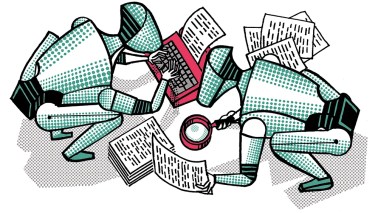
Late last year, I published the first theoretical physics paper in which the main idea originated from artificial intelligence – from an AI. And my experience working with the most powerful AI models left me both impressed and wary. The most accurate analogy I can offer is that it’s like something familiar to anyone who has done research: a brilliant colleague who is also unreliable. This colleague can produce deep insights at surprising speed – and then, the next second, make an error that ranges from the trivial to the profound. That tension – capability versus reliability – has shaped how I now use these systems in mathematics and theoretical

The new power of cryptid belief

Last month, during the Arctic Blast that still has a few states trapped under ice (greetings from Illinois), someone posted an altered Google Earth screenshot to Facebook. The image displayed a snake-like shape in the Atlantic Ocean, east of Virginia. “The Leviathan is waking up,” the caption read. “This is why they are creating a FAKE snow storm and manipulating the weather so they can freeze it because of the military bases in the area.” The post gained enough traction to land on Know Your Meme, the internet’s best-kept meme encyclopedia. But it wasn’t just a meme, at least in the sense we usually mean. A lot of people earnestly

The Artemis II mission is an exercise in wonder

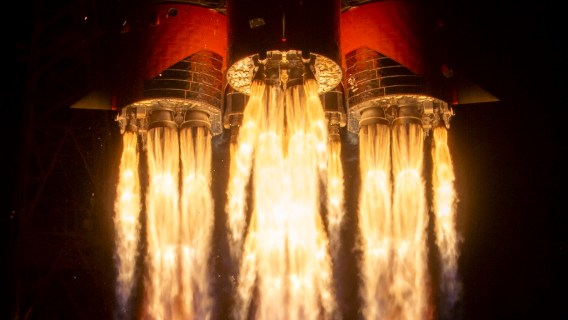
When the Artemis II mission eventually blasts off, it will take humans back to the Moon for the first time in more than 50 years. Americans Reid Wiseman, Victor Glover, Christina Koch and Canadian Jeremy Hansen will travel further out into space than anyone before when they loop 4,700 miles beyond the Moon, seeing parts of it never before glimpsed by human eyes. The flight is designed to put the powerful Space Launch System rocket and the Orion capsule, with its European-made Service Module, through their paces. Three hours after launch, the crew will monitor a procedure not performed since 1972, so-called TLI – Trans-Lunar Injection. Only five of the

Is there a free-speech defense of Grok’s deepfakes?

There are scenes in blockbuster teen movies from the 1980s and 1990s that wouldn’t fly today. I think of Revenge of the Nerds, that classic raunchy coming-of-age tale about pocket protector-wearing geeks no woman would ever touch with a three-foot slide rule. You might recall the heroes of the story install hidden cameras in a sorority house in order to spy on naked, skinny, blonde cheerleaders. In triumph, the Byronic dirtbag yells, “We’ve got bush!” In our purportedly more enlightened age, Hollywood has forsaken making risqué teen comedies for vulgar imps; instead the vulgar imps have taken their raunch to the lawless internet. The powers of AI have multiplied their

grok

US special forces’ secret weapons

By using a sonic weapon in the mission to capture Nicolás Maduro, as Donald Trump appears to have confirmed, Delta Force commandos not only triggered a paradigm shift in warfare, but served poetic justice. When asked whether such a weapon had been used, the President replied: “It’s probably good not to talk about it.” But then added: “Nobody else has it, we have some amazing weapons that nobody knows about.” The following morning, at Davos, Trump said: “They weren’t able to fire a single shot at us. They said, ‘What happened?’ Everything was discombobulated.” An unsubstantiated interview with a Venezuelan guard, who claimed he had been targeted with a sonic

sonic

AI marketing is driving me to distraction

For years, retailers have been behaving like needy friends. My phone would ping. “Hi there!” an email would read, “We’ve missed you.” Who could this be? I would wonder happily, before realizing that the warm and loving message was from someone in the marketing department of the emporium from which I’d once bought a couple of pairs of expensive shoes. Emma usually, or Olivia. With the advent of artificial intelligence, though, personalized, over-the-top PR is getting much, much worse. At least in the past you’d needed an actual Emma to send these emails, some girl who’d gone into marketing, typing enthusiastic nonsense all day. There was at least a human

The drive toward electric cars has been a disaster

Just two years ago, Mary Barra, chief executive of General Motors, declared: “We believe in an all-electric future.” She went on to claim that the challenges her company was facing in the EV market were merely temporary bumps on the road to net zero. But as Bob Dylan famously observed, things have changed. On January 8, GM announced it would take a $7.1 billion hit in charges against its earnings, of which $6 billion is due to Barra’s failed EV strategy. In a filing with the SEC, the company also warned that it would take more write-downs this year as part of a “strategic realignment of EV capacity.” The car

Greenland and the new space race

Donald Trump’s desire for Greenland is not just about access to oil, minerals and control of the new strategic and commercial corridors opening in the region. It’s also about data. Specifically, the most important data in the world. For decades, Pituffik Space Base – formerly Thule – in Greenland has been central to US space defense and Arctic strategy. It’s the US military’s only base above the Arctic Circle and their most northerly deep-water port and airstrip. It’s home to the 12th Space Warning Squadron. Its massive AN/FPS-132 radar has 240 degrees of coverage surveying the Arctic Ocean and Russia’s northern coast, especially the Kola peninsula where it has concentrated

greenland

Inside the Democrats’ AI skepticism

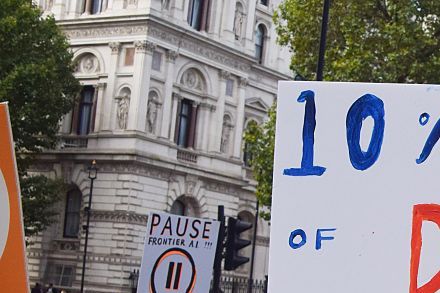
Bernie Sanders has been rolling out political hot takes for more than half a century, and in recent years his familiar socialist prescriptions have found a new focus: artificial intelligence. In 2023 he argued that workers who use it should be entitled to a four-day week. In October of last year he called on corporations who employ AI to be hit with a “robot tax”. And, just last month, he made his punchiest proposal yet: a complete moratorium on all AI data centers. In a characteristically plaintive video address, the Vermont Senator argued that halting data center construction would “give democracy a chance to catch up,” preventing the benefits of

AI

The Maduro raid was a triumph of American innovation

In the early hours of Saturday, January 3, Caracas went dark. Power failed across much of the city as strikes and cyber-attacks disabled critical systems. What followed was not a conventional invasion, but one of the most audacious special forces operations in modern history. Within hours, Nicolás Maduro and his wife, Cilia Flores, had been seized from the heart of Venezuela’s largest military complex. No tanks rolled through the streets. No territory was occupied. The operation succeeded not through brute force alone, but because of something far more decisive: overwhelming American dominance of intelligence, networks, surveillance and infrastructure. Power rests less on the capacity to destroy than on the capacity

maduro american

AI porn will spawn a nation of addicts

If there is one safe prediction we can make about 2026, it is this: public debate and global news will be dominated by artificial intelligence and the anxieties that surround it. And near the top of that swelling list of worries will be “AI porn” – the fateful collision between ever more accomplished image-making machines and humanity’s eternal appetite for audiovisual sexual stimulation. The year has barely begun and already two loud tsunami sirens have sounded. The first is the latest Grok incident. For the uninitiated, Grok is Elon Musk’s AI, conceived a couple of years ago in a fit of pique after Musk’s spectacular falling-out with OpenAI. Despite its

The gender hydra is about technology, not ideology

I hope this is the year people fighting the gender hydra, with its proliferation of harms across society, finally recognize that this is not a culture war. It is a war against a rapidly expanding industry built on the deconstruction of sex and, like any profitable industry, it will continue growing until it is stopped. Calling it a medical scandal, misogyny, or social contagion will not create a sustainable resistance unless people understand it as an industry. At the heart of the matter is the fact that industries in capitalist systems must expand to survive. And once they do, once a market forms, they’re near-impossible to erase. They begin to

How ticks became bioweapons

On December 18 last year, Donald Trump signed into law an order to “review and report on biological weapons experiments on and in relation to ticks [and] tick-borne diseases.” The investigation is long overdue but even so, the facts it uncovers will come as a shock to many. A growing body of evidence shows that during the Cold War ticks were tinkered with and used as delivery mechanisms for biological warfare agents. And these weaponized ticks may have been released both intentionally and unintentionally on an unsuspecting public by the US military. Ticks and the diseases they transmit (such as Lyme) pose a growing threat to Americans, the military and

The sinister side of Grok

The X-native AI Grok exploded in popularity this weekend – as users discovered that its media tab was filled with requests to generate disrobed and scantily clad versions of images of women and children that people had posted publicly. “Put her in a bikini,” users asked the AI. Grok complied with these requests freely, with no meaningful oversight or guardrails in place, automatically generating images corresponding to every prurient prompt. The ensuing discourse quickly polarized. On one side were tech nihilists, arguing that this use of AI was inevitable and therefore unsurprising. After all, anyone can already download publicly posted images and manipulate them privately. On the other were mostly

grok