Technology

Is this the end of the cold case?

On March 6, 1959, nine-year-old Candice “Candy” Rogers of Spokane, Washington, went out after school to sell campfire mints door-to-door. Sweet-natured with strawberry blonde curls and a button nose, she was small for her age. Her mother, Elaine, had one clear rule that Candy must be home before dark. But Candy never came home. Her disappearance triggered a 16-day manhunt involving thousands of people, the Marines and the US Air Force. In fact, three airmen lost their lives on the second day when their helicopter hit high tension cables and plummeted into the Spokane River.  After two weeks of searching for Candy, all detectives could find were her scattered mint boxes.

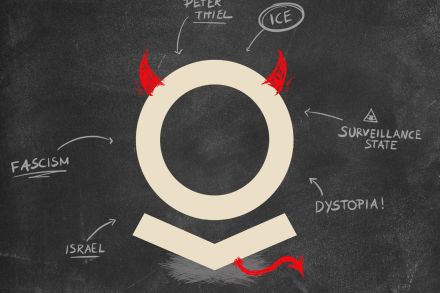
Peter Thiel predicts the future

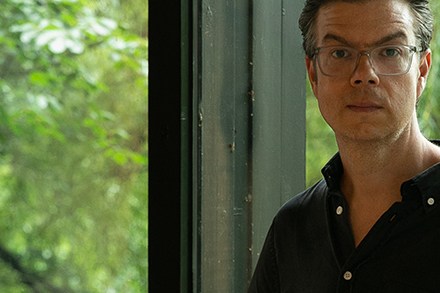
Peter Thiel has been described variously as “America’s leading public intellectual,” the “architect of Silicon Valley’s contemporary ethos” or as an “incoherent and alarmingly super-nationalistic” malevolent force. The PayPal and Palantir founder, a prominent early supporter of Donald Trump, is one of the world’s richest and most influential men. Throughout his career, his principal concern has always been the future, so when The Spectator asked to interview him, he wanted to talk to young people. To that effect, three young members of the editorial team were sent to Los Angeles to meet him. What follows is an edited transcript of their conversation. WILLIAM ATKINSON: Following Zohran Mamdani’s victory in New

Talk to your dead grandmother thanks to AI

Doing the rounds on social media is the most disturbing ad I’ve ever seen. And I’m telling you about it because you need to be forewarned, just in case this Christmas a child or a grandchild happens to mention that it might be an idea to record a video for posterity, and opens the 2wai app. 2wai is the company responsible for the ad, and the service it offers is the creation of AI versions of family members so that relatives can talk to them after they’re dead. Catch ’em while they’re still alive, says 2wai; film a three-minute interview and Bob’s your AI uncle. “Loved ones we’ve lost can

granny AI

I’m a slave to my Apple Watch

Aside from streaming on an iPad, when riding a stationary bike one of the few entertainments on offer is tracking your heart rate. Breaking 150 beats per minute provides a fleeting (and doubtless misplaced) sense of achievement. Yet the wearable heart monitor that came with my exercise bicycle proved unreliable; one’s BPM never truly drops from 137 to 69 in one second. This is all to explain why I bought the fitness freak’s fetish: an Apple watch. Its heart rate monitors are accurate. I opted for a reconditioned older model, not only half the price of the new ones but inclusive of the pulse oximeter function, which a medical technology

apple watch

How the occult captured the modern mind

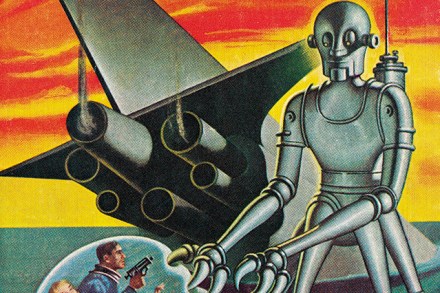
The British science-fiction writer Arthur C. Clarke, author of 2001: A Space Odyssey, proposed a “law of science” in 1968: “Any sufficiently advanced technology is indistinguishable from magic.” Clarke’s proposition had a quality of rightness, of stating the obvious with sparkling clarity, that propelled it into dictionaries of quotations. The timing was perfect: Concorde would soon be flying over rock festivals packed with hippies obsessed with “magick.” Naturally Clarke’s readers understood the difference between aerodynamics and sky gods. But African tribesmen gawping at an early airplane, or Pacific Islanders watching an atomic explosion, could only conclude that they were witnessing a supernatural event: for them, a scientific explanation was literally