Philip Clark

Jon Fosse’s Scandi-lit revival

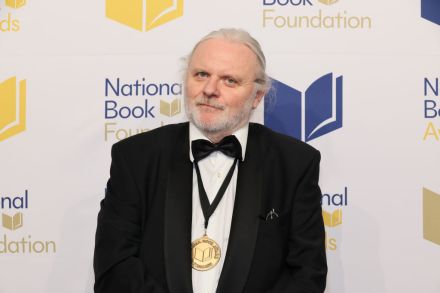
Jon Fosse, the Norwegian novelist who won the 2023 Nobel Prize in Literature, has sat center stage in the recent revival of interest in Scandinavian literature. Fosse’s one-time creative-writing student Karl Ove Knausgård became the very definition of a publishing sensation when the first volume of his six-part memoir Min Kamp (“My Struggle”) – in
The genius of Morton Feldman

From our UK edition

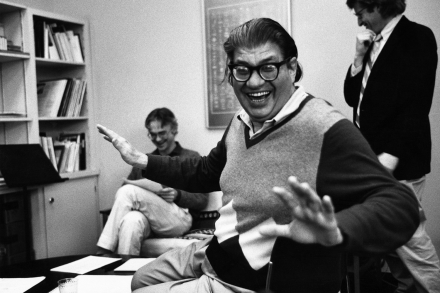
To accompany an exhibition of paintings by Philip Guston at the Royal Academy of Arts in London in 2004, a performance was arranged of Morton Feldman’s composition written in homage to Guston, for which I was persuaded to page-turn. For Philip Guston runs non-stop for four hours and the thick A3 bundle of manuscript paper

More terrible beauty

From our UK edition

At some point during your reading of this book the realisation might dawn, if you didn’t already know about his creative double life, that Richard Skelton demonstrates an unusual sensitivity to sound. Barbed wire unfolds over a dry-stone wall, an image which he reimagines as a mutant stringed instrument. ‘What harmonies would result if all

Indian classical music’s rebellion against modernity

From our UK edition

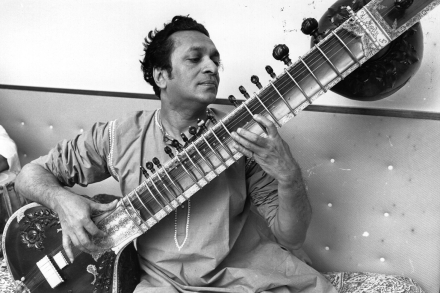
When Gurdain Ryatt, Ojas Adhiya, Milind Kulkarni and Murad Ali Khan take to the stage at Milton Court this Sunday they will be united by a common language: the tradition of Hindustani Indian classical music, rooted in the north of India. Ryatt and Adhiya’s job will be to keep beats circulating on their pitched, drum-like

The very essence of jazz: Mingus In Argentina reviewed

From our UK edition

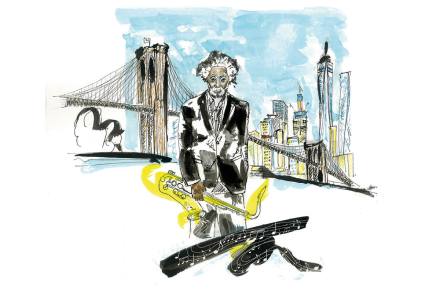
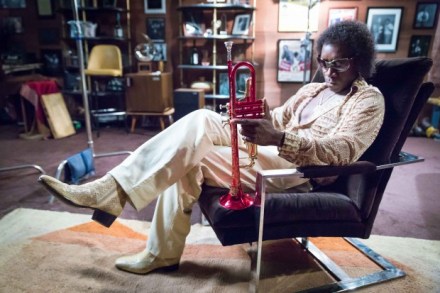
Grade: B Charles Mingus arrived in Buenos Aires at the start of his 1977 Argentinian tour with aching joints, an ominous first sign of the muscle-wasting Lou Gehrig’s disease that would claim his life two years later. Musically, he was at a musical crossroads too. His record label, Atlantic, had insisted on adding electric guitarists

The Renaissance master who rescued polyphonic music

From our UK edition

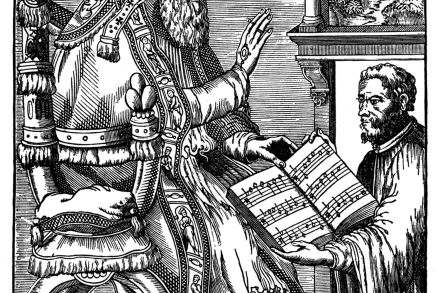
Last month I watched conductor Harry Christophers blow through what sounded like an arthritic harmonica but in fact was a pure-toned pitch pipe, which handed the singers of his vocal group the Sixteen their starting notes. Then the Kyrie from Giovanni Pierluigi da Palestrina’s Missa Regina coeli unfolded inside the resonant splendour of St James’s

RIP to new music’s gentle, smiley radical

From our UK edition

Danish composer Per Norgard – whose death at the age of 92 was announced this morning – was a towering presence in European new music, and the shine-bright timbres and heady narrative drive of his eight symphonies posed crucial questions about what it meant to be a symphonist during the late 20th century. In 2000

My adventures in experimental music – by David Keenan

From our UK edition

David Keenan acquired his craft as a music writer, he says, from reading the crème de la crème of critics who milked rock music for all it was worth during the 1970s – Lester Bangs, Griel Marcus, Paul Morley, Biba Kopf – before deciding that rock criticism was not his bag. In the preface to

The unnerving world of Erik Satie’s 20-hour composition 

From our UK edition

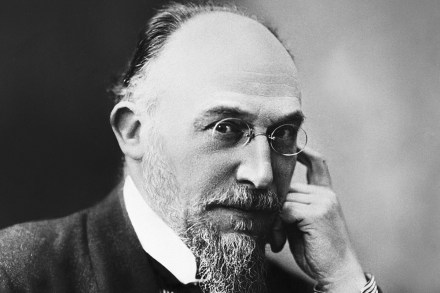
Once Igor Levit starts playing Erik Satie at 10 a.m. on 24 April at the Queen Elizabeth Hall, he can expect to be there for a long time. Satie’s Vexations is a piece that looks innocent enough, like butter wouldn’t melt in its composer’s ears. A doleful 18-note theme in the bass is filled in

Bach to basics

From our UK edition

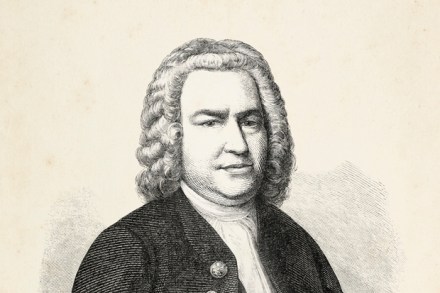
The churning, rheumatic mechanism of a harpsichord — notes needling your ears like drops of acid rain — doesn’t necessarily play well to an audience whose sensibilities have been moulded around the picture-perfect delicacies of the classical piano. J.S. Bach’s freakishly popular Goldberg Variations remains best known through the recording made by the oddball Canadian

Playing for high stakes

From our UK edition

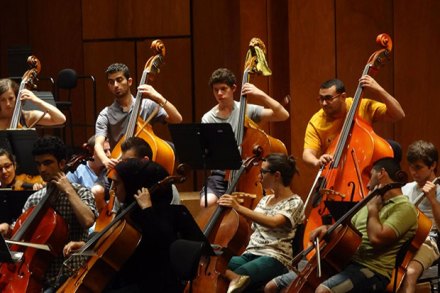
Now that even candidates for President of the United States can rise up from the undead dregs of reality television, it comes as no surprise to read that the National Youth Orchestra of Iraq owes its origins to a conclave of television execs. In 2008, Channel 4 and the independent production company Raw TV took

How does Karl Jenkins get away with his crappy music?

From our UK edition

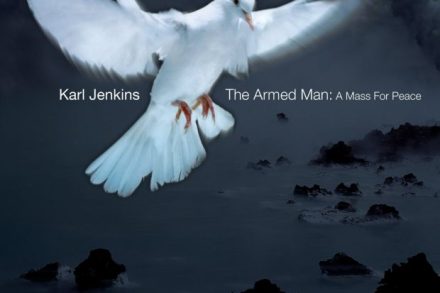
In a week that saw the UK vote itself out of the EU, the resignation of David Cameron followed by most of Jeremy Corbyn’s shadow cabinet, the audience who dutifully trooped to the Royal Albert Hall this Sunday for a concert celebrating the 2,000th performance of Karl Jenkins’ The Armed Man – A Mass for Peace

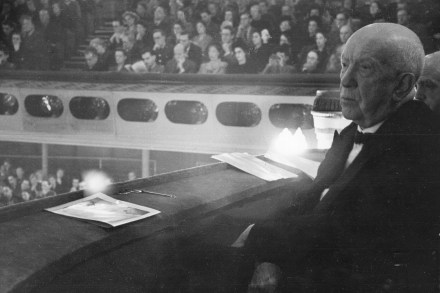
Richard Strauss was no conservative

From our UK edition

With the ardent zeal characteristic of the freshly converted, I found myself channelling waves of anger towards Stanley Kubrick. The closing bars of Also sprach Zarathustra had utterly turned my head, transforming what had been my passing interest in the music of Richard Strauss into an infectious bout of Strauss monomania. Kubrick’s exquisitely consummated marriage